Pearls
Buying pearls: how to compare lustre, surface, shape and care
A practical guide to comparing pearl appearance and construction, understanding common pearl types, asking about treatments and keeping pearls in good condition.
Start with what “pearl quality” means to you
Pearl shopping can feel difficult because several qualities interact, and there is no single visual feature that makes every pearl desirable. The Gemological Institute of America (GIA) describes seven value factors for pearls: size, shape, colour, lustre, surface quality, nacre quality and matching. Its [pearl quality guide](https://www.gia.edu/pearl-quality-factor) is a useful vocabulary reference, not a universal price list. Decide first how you plan to wear the piece. A single pearl pendant makes one pearl’s surface and shape prominent; a multi-pearl strand depends more on how the pearls match in colour, size and appearance. If you prefer a soft, even glow, lustre may matter more than a perfectly round outline. If you want a classic symmetrical strand, shape and matching may take priority. Naming your preferences turns comparison into a manageable exercise rather than a hunt for an abstract “best” pearl.
Bring the same questions to every seller. What type of pearl is it? Is the description based on the seller’s inspection, a laboratory report or another document? Has the pearl been treated or enhanced, and what is known about that treatment? What materials are used in the clasp, stringing and setting? What aftercare is offered? Ask for details to appear on the quotation or invoice where practical. Two pieces that look similar in a photograph may differ in origin, size, surface, matching or construction. A clear description gives you a fair basis to compare them. If terminology is vague, ask the seller to describe what you can see rather than relying on a grade word without a stated system.
“Decide which appearance factors matter most to you before browsing.”
From the practical checklist

Learn how lustre differs from shine
Lustre is the way light reflects from a pearl’s surface and interacts with the layers beneath it. A pearl with strong lustre can show crisp reflections and a sense of depth; a lower-lustre pearl may appear softer or more diffuse. This is different from a simple wet-looking shine produced by a bright lamp or polished setting. GIA’s [pearl education](https://www.gia.edu/gem-education/course-pearl) explains that lustre is one of the most important factors in pearl appearance, while the other value factors still contribute. View a pearl under diffuse daylight-like illumination and under the shop’s display lighting. Move it slightly and see whether the reflection stays distinct or becomes hazy. Compare several pearls at the same distance, without a phone camera between you and the piece, because exposure and screen processing can make different surfaces look alike.
Colour includes body colour and, in some pearls, overtones that appear as subtle hues across the surface. The exact appearance can change with the background and light. A white pearl may show rose, silver or cream nuances; darker pearls may show green, purple or other overtones. These terms describe appearance, not an independent grade by themselves. Ask the seller to identify the body colour and any overtone they are claiming, then inspect the pearl in neutral light. If a strand is meant to be matched, compare every pearl rather than judging only the central one. Personal preference is legitimate: an overtone that one shopper values may not be another shopper’s preference. The practical question is whether the piece looks harmonious to you and whether its description is clear.
Examine surface, shape, size and matching
Natural and cultured pearls form in biological environments, so surface features and small variations can occur. Inspect the pearl for spots, bumps, pits, wrinkles or areas where the surface appears dull. A mark is not automatically a defect that makes a pearl unsuitable; its location, size and visibility at normal wearing distance matter. For a pendant, a feature hidden near the drill hole may be less noticeable than one in the centre of the face. For earrings or a strand, compare the pair or sequence as a whole. Ask whether a visible feature is included in the seller’s description and whether it affects the setting or durability. Do not let magnification alone define the decision: a loupe reveals details most people will not see during ordinary wear, but it can help identify a surface issue worth discussing.
Shape ranges from round and near-round to oval, button, drop, baroque and other irregular forms. Roundness is often prized in some styles, but an intentionally baroque pearl may be chosen for its distinctive outline. Size is usually expressed by diameter in millimetres, though measurement method and strand variation should be clarified. In a pair of earrings, ask whether the two pearls are matched for size and appearance. In a strand, look at the transition from one pearl to the next: the overall sequence can matter more than perfect identity. GIA’s research describes matching as its own value factor for multi-pearl jewellery. View the entire strand in a straight line, then drape it as it would be worn. Ask whether the clasp is included in the stated length and how much variation exists across the piece.
Understand common pearl types without ranking them
“Freshwater,” “Akoya,” “South Sea” and “Tahitian” refer to different cultured-pearl categories associated with different molluscs, growing environments and trade descriptions. They are not a simple ladder from low to high quality. Individual pearls within any category vary in lustre, surface, shape, size, colour and matching. Some freshwater pearls are carefully selected for strong lustre and matching; some saltwater pearls show visible surface features or lower lustre. The name alone cannot tell you whether a specific strand suits your taste or whether its price is appropriate. Ask the retailer what the category term means for the actual item and whether the pearls are natural or cultured. GIA’s [pearl classification research](https://www.gia.edu/gems-gemology/summer-2021-pearl-classification-the-gia-7-pearl-value-factors) discusses classification and value factors; use it to understand terminology, not to infer a guaranteed grade from a marketing label.
Pearl origin descriptions and colour names can be used inconsistently in retail copy. For example, a dark pearl may be described with a trade colour name that does not itself establish a particular species or origin. Ask whether the colour is natural or treated, whether the pearls are dyed or otherwise enhanced, and what evidence supports the answer. GIA explains that pearl treatments can include processes that change or improve appearance; the significance depends on the specific treatment and the disclosure. If an expensive piece is accompanied by a laboratory report, check what the report actually identifies and what it does not. A report may identify a pearl as natural or cultured and record certain observations, but it is not necessarily a valuation or a guarantee about future colour stability. Get material origin and treatment statements in writing.
Compare construction, not only the pearls
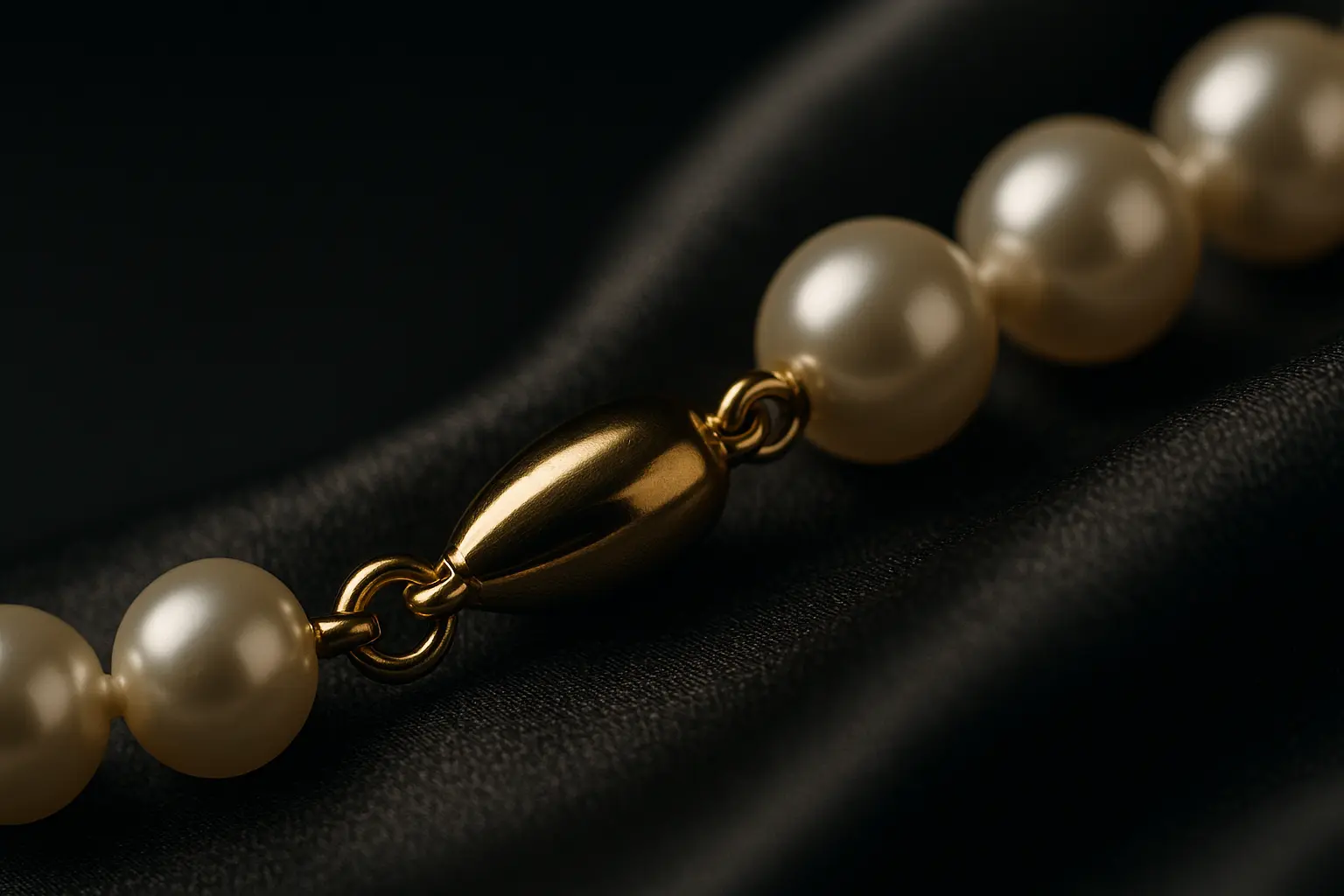
A strand is more than a sequence of pearls. Check whether the pearls are individually knotted, how the knots sit, and whether the thread looks even and secure. Knots can reduce pearl-to-pearl abrasion and can keep most pearls from scattering if a strand breaks, though construction varies. Ask the jeweller how the strand should be stored and when it might need restringing. Look at the clasp: is it secure, easy for the wearer to operate, and made from the metal stated in the description? Ask whether the clasp has a safety catch and how repairs are handled. For earrings, check the posts, backs and fittings; for a pendant, inspect the bail and the way the pearl is attached. These details affect everyday usefulness even when the pearls themselves are attractive.
Ask for the pearl count, approximate size range, metal description, total length and any differences in the pair or strand to be recorded on the invoice. If a pearl is glued, drilled or mounted in a particular way, ask whether that changes how it should be cleaned or repaired. A retailer may offer restringing, inspection or cleaning, but these are business-specific services. Ask what is included, the time frame, cost and exclusions rather than assuming “aftercare” covers all work. If a clasp or setting needs repair later, a jeweller should know what materials were used. A clear purchase record helps another professional service the piece without having to infer its construction from appearance alone.
Wear and care: keep pearls away from avoidable damage
Pearls are organic gem materials and need different care from many hard gemstones. Perfume, cosmetics, hairspray, household cleaners and other chemicals can affect the surface or the materials around it. A simple habit is to put pearls on after applying cosmetics and fragrance, then wipe them gently with a soft, clean cloth after wearing. Do not use an ultrasonic cleaner, steam cleaner, abrasive paste or an unverified jewellery dip unless a qualified jeweller has confirmed it is safe for that exact piece. Gem-A’s [gemstone care guidance](https://gem-a.com/gem-hub/gemstone-care/) includes pearl-specific advice. Follow the instructions supplied by the seller, especially if the piece includes other materials or treatments. If a pearl becomes dull or dirty around the drill hole, ask a professional to assess it instead of trying an aggressive household cleaning method.
Store pearls separately from harder gems and metal pieces so they are less likely to be scratched. A soft pouch or lined compartment helps reduce friction; avoid leaving a strand in direct heat, prolonged sunlight or very dry conditions. Do not hang a long strand for long-term storage unless the jeweller recommends it, because the thread can stretch under its own weight. After swimming, exercising or exposure to perspiration, wipe the pearls gently and let them dry before storing. These are general care habits, not a guarantee that a pearl will remain unchanged forever; wear, environment and construction all matter. Ask the retailer whether the stringing material and setting require particular maintenance and whether an inspection is available.
Ask for evidence and compare price responsibly
The price of a pearl piece reflects more than its type name. Size, lustre, surface, shape, colour, matching, origin, treatment, construction, metal, brand and retail services may all contribute. There is no reliable single price rule that lets a buyer infer quality from a number alone. Compare at least two pieces with similar descriptions, and ask each seller to state the factors behind the price. If the piece is important enough to warrant independent identification, ask a qualified gemmological laboratory or professional what service is appropriate. A grading or identification document should be read within its stated scope; it may not be an appraisal, and a valuation may not predict resale. Keep the report, invoice and treatment disclosure together.
Do not buy solely from a photograph when surface, lustre and colour are central to your choice. Screen images can change white balance, contrast, crop and shine, while a strand may not be shown at full scale. If purchasing online, request a current, unfiltered video under neutral light, exact measurements and a written return policy; ask whether the footage shows the actual item rather than a representative sample. Confirm the seller’s official contact information and the process for returns before paying. For a high-value purchase, take time to review the documents and, if needed, obtain independent advice. A careful pearl purchase is not about finding a flawless sphere; it is about understanding what the particular piece is, how it is made, how it will look in real life and how it should be cared for.
Practical checklist
- ✓ Decide which appearance factors matter most to you before browsing.
- ✓ Compare lustre, surface, shape, colour and matching in neutral light.
- ✓ Ask pearl type, cultured/natural status, treatments and exact measurements.
- ✓ Inspect strand knots, clasp, earring fittings and setting construction.
- ✓ Get the description, metal and any report information on the invoice.
- ✓ Keep pearls away from chemicals, hard jewellery, heat and harsh cleaners.
- ✓ Ask about cleaning, inspection and restringing terms; do not assume they are included.
Published 28 September 2026 · Reviewed 28 September 2026 · Editorial policy · Suggest a correction
Sources and further reading
-
GIA Pearl Quality Factors
GIA · Accessed 28 September 2026
-
GIA Pearl Course
GIA · Accessed 28 September 2026
-
GIA pearl classification research
GIA Gems & Gemology · Accessed 28 September 2026
-
Gem-A gemstone care
Gem-A · Accessed 28 September 2026