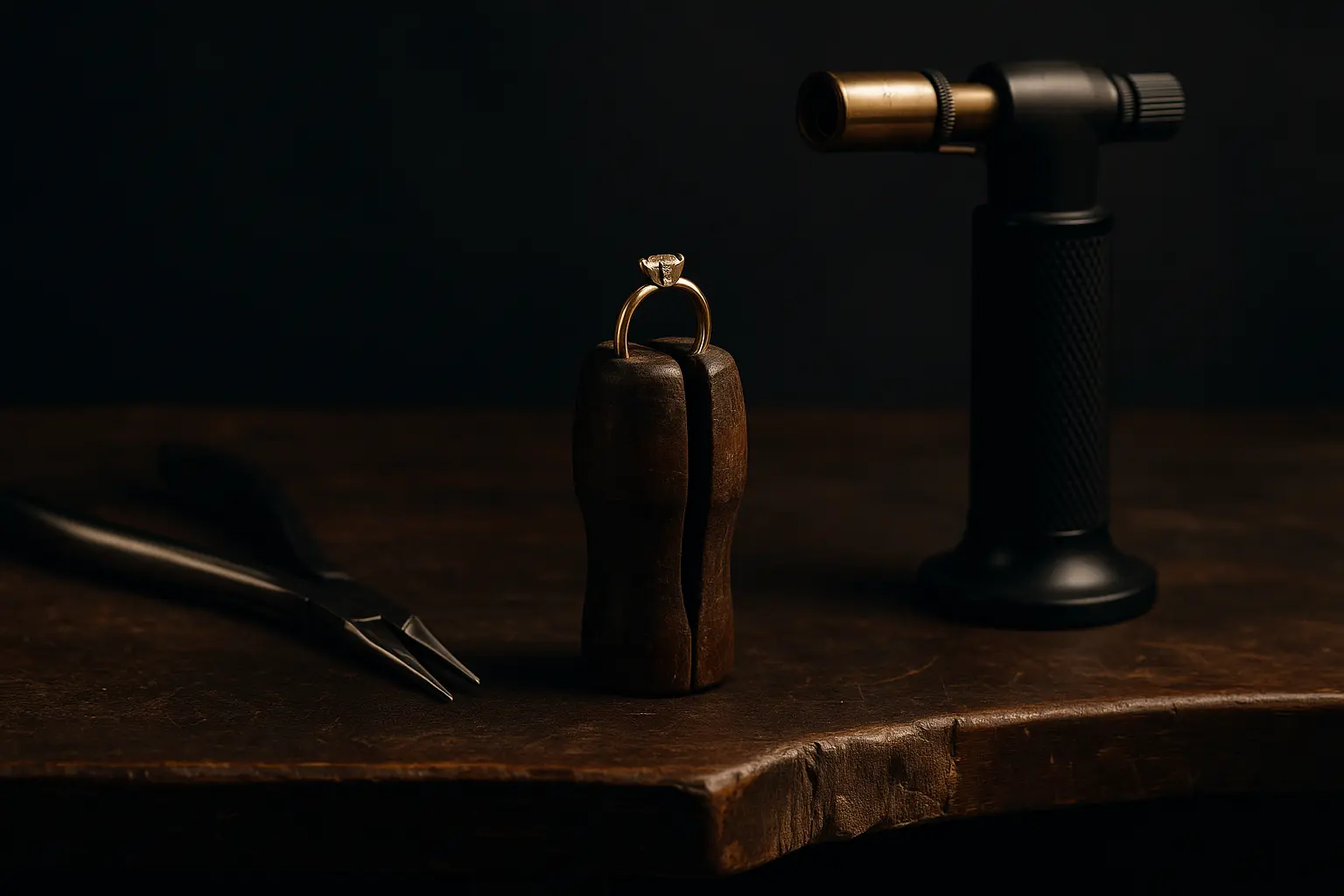
Aftercare and warranties
Jewellery aftercare and warranties: what to ask before you pay
Separate written warranty, paid service and goodwill; compare scope, exclusions and care requirements before buying, then keep the records you will need later.
Three promises that sound similar but are not
When a seller says "we look after our customers," that sentence can refer to very different things. A warranty is a written commitment with a defined scope, duration and conditions. A paid service is work you can buy—such as cleaning, inspection or repair—at a stated price. Goodwill is a discretionary gesture a business may offer in a particular case, but it is not necessarily a continuing promise. None is automatically better for every buyer. The important distinction is whether the retailer has made a specific commitment you can read and rely on. Ask which category an offer belongs to, whether it is in writing, who provides it, and what document will apply if you later need help.
Do not treat a warm verbal assurance as a substitute for a policy. "Bring it back any time" does not tell you whether labour is free, parts are included, a time limit applies, or an accident is covered. Ask the retailer to explain the service in plain language and point to the relevant written terms. If the promise is important to your decision, request that it be recorded on the quotation, warranty card or invoice. A useful description names the work, the period, the price if any, and the exclusions. If no written warranty exists, you can still ask whether paid cleaning, resizing or repairs are available and what they cost. Clear expectations protect both you and the business from memory-based disagreements.
“Separate warranty/service/goodwill; read inclusions and exclusions.”
From the practical checklist

Read coverage and exclusions together
Start with the specific piece and ask what the policy covers. It may address a manufacturing defect, a setting that loosens under stated conditions, a clasp fault or a particular repair. It may cover labour but not replacement materials, or cover the setting but not a gemstone. Ask whether cleaning and inspection are included, whether an appointment is required, and whether the policy follows the original purchaser or the item. Equally important is what it excludes: loss, theft, accidental damage, normal wear, unauthorised alterations, or damage from chemicals may be outside the seller's commitment. Exclusions differ widely. Do not assume that one brand's terms describe the rest of the industry.
Ask how a claim is assessed. What evidence should you bring? Is the original invoice required? Does the retailer inspect the item before deciding whether a repair is covered? What happens if the cause of a fault is uncertain? If the retailer sends work to an outside specialist, who is responsible for updates and collection? These are ordinary service questions, not accusations. A policy that explains the process is easier to use than one that promises "lifetime care" without explaining what that means. If the item is expensive, ask whether the written terms will remain available online or whether you should retain a printed copy. Store the policy with the purchase record so you can find it when needed.
Distinguish seller care from insurance
A retailer's warranty is not the same as insurance. A warranty may address a defined fault under the seller's terms; insurance is a separate contract with an insurer and may cover specified events such as theft or accidental loss subject to its exclusions, excess and claim requirements. Neither automatically replaces the other. Ask your insurer what records and valuation format it needs before assuming the shop's receipt or an appraisal is sufficient. A grading report identifies gemological characteristics; an invoice records the purchase; an appraisal estimates value for a stated purpose and date. These documents perform different jobs. The U.S. Federal Trade Commission's [consumer warranty guidance](https://consumer.ftc.gov/articles/warranties) explains US warranty concepts; it is useful general reading but does not set Hong Kong rules.
If you are comparing insurance, read the actual policy wording and ask about coverage territory, pair-and-set treatment, repair options, depreciation, excess, security conditions and documentation. These terms vary by provider and product. Do not rely on a seller's general statement that "insurance will cover it." Similarly, a retailer's service plan may be helpful but cannot be assumed to cover theft, loss or every accidental event. Make a list of the risks you care about and ask the responsible provider—not only the salesperson—whether each is included. Keep answers and policy documents in writing. If a claim is material to your purchase, take time to confirm it before paying rather than trying to reconstruct it after a problem occurs.
Match care advice to the material and design
Jewellery care is not one universal routine. Gold alloy, platinum, pearls, jade, diamonds, coloured gems, enamel, adhesives and plated surfaces respond differently to chemicals, heat, abrasion and cleaning methods. A cleaning method that is suitable for one metal may be inappropriate for a pearl or a gem with a treatment. Ask how to clean the exact piece, what to avoid, and whether the seller recommends professional inspection. Do not use an ultrasonic or steam cleaner simply because a general article says it is safe for jewellery; the setting, stone, treatment and construction matter. Request care instructions in writing, particularly for a bespoke piece or a design with several materials.
Ask what normal wear looks like for the item. Fine chains can stretch or break; prongs can wear; clasps can loosen; plating may thin; pearls may need restringing. That does not mean every piece will develop those issues on a particular schedule. Wear frequency, construction, storage and activity all affect maintenance. Remove jewellery for activities where it could be struck, exposed to chemicals or caught, if the jeweller advises it. Store pieces separately so they do not rub together. If a seller offers periodic checks, ask what is inspected, how often the maker recommends it, whether it is complimentary, and how findings are reported. The interval should be a recommendation for that design, not a universal calendar rule.
Check third-party repair and resizing terms
A policy may require service by the original retailer or an approved specialist. Before you buy, ask whether an independent jeweller's resizing or repair affects the warranty, and whether the restriction applies to all work or only work that causes damage. This matters if you move, travel or need a time-sensitive repair. Ask whether the original maker will provide a written estimate and whether the piece must be sent away. For a ring, confirm whether its setting style and material can be resized, how many sizes may be feasible, the likely turnaround and cost, and whether stones need to be removed or checked afterwards. Do not assume resizing is included because a salesperson says "we can adjust it."
For a repair, request a condition record before work starts: photographs, description of existing wear, itemised scope and estimated cost. Ask the jeweller to contact you before carrying out any additional work beyond the estimate. If the item contains a valuable centre stone, confirm how it is secured and insured while in the workshop's care. When collecting it, inspect the completed work and request a service receipt describing what was changed. These steps are especially useful when a warranty claim is involved, because they distinguish the original condition from the repair outcome. Keep any removed parts if relevant and ask why they were replaced. A careful record makes future service easier even when there is no disagreement.
Compare aftercare as part of the total offer
Two retailers may quote different prices for similar-looking pieces but include different services. One may offer a complimentary first cleaning; another may provide a written repair warranty; a third may charge separately for every visit. Compare the actual scope, duration, labour, materials, exclusions and booking process rather than the phrase "free lifetime service." Ask what happens when the original staff member or shop location is no longer available, and which entity is responsible for honouring the policy. For an online order, check who pays shipping for a repair, whether the piece must be returned to the original seller, and how a parcel is tracked. Terms matter most when you need to use them, so identify the route before purchase.
The Hong Kong Consumer Council has published information about jewellery complaints and encourages consumers to keep transaction records. Its [jewellery complaint information](https://www.consumer.org.hk/en/press-release/532-jewelry-complaints) provides context for why specific descriptions and receipts matter; it does not promise a particular result in an individual case. Retain the listing, quote, invoice, policy, messages, photographs and any report. If an issue arises, contact the retailer through its official channel, explain the problem factually, attach copies and request a written response. If you cannot resolve it, consult the appropriate consumer-advice or dispute-resolution resource for current guidance. This guide is not legal advice; rights depend on the facts and applicable law.
Questions to ask before payment
Use a short checklist during the consultation: Is there a written warranty, paid plan or discretionary goodwill? What work is covered, for how long, and for which parts? Are labour and materials both included? What is excluded? Does resizing or third-party repair affect coverage? Is inspection or cleaning available, and at what price? What records should I keep? How do I make a claim, and who assesses it? Will the terms be supplied with the invoice? For online purchases, how are shipping and tracking handled? Asking the same questions of each seller makes comparison clearer and keeps the discussion focused on practical service rather than vague confidence-building language.
Read the terms before paying the deposit or accepting delivery, not only after a problem occurs. If the policy is lengthy, take a copy away and mark anything unclear. Ask the retailer to clarify an ambiguous phrase in writing. If an important promise is missing from the document, request that it be added or reconsider how much value to assign it. No aftercare policy can prevent every accident or ordinary wear, but a clear one tells you what support is available and what you must do. A trustworthy purchase includes not only the object but a realistic understanding of its care, likely maintenance and the limits of the seller's commitment.
Keep an aftercare file
Save the dated product description, invoice, warranty or service plan, care instructions, photographs, grading or identification report, and any appraisal separately from the warranty. Record the retailer's official contact details and any service appointment. If the item is resized or repaired, add the estimate and final service note. For a high-value piece, ask an insurer what valuation or ownership evidence it needs and when it expects documents to be updated; requirements depend on the policy and insurer. Do not assume a retail replacement estimate is the same as resale value or an insurer-approved value. Keep digital copies in a secure place and retain originals if the provider asks for them.
Before each professional service visit, describe how the item is worn and any change you have noticed. Ask the jeweller to explain the findings and separate urgent repair from optional maintenance. Get consent and cost approval before work begins. After collection, check the item and keep the service record. Over time, this file gives a useful history of what the piece is, what work has been done and what the seller promised. The process is simple: clarify terms before buying, follow care instructions that fit the object, and document each service. That is more reliable than assuming every jeweller offers the same aftercare or that a broad marketing phrase will answer a specific question.
Practical checklist
- ✓ Separate warranty/service/goodwill; read inclusions and exclusions.
- ✓ Distinguish seller policy from insurance.
- ✓ Get care instructions for exact materials.
- ✓ Ask repair and third-party work effects.
- ✓ Compare written costs/durations.
- ✓ Keep invoice, policy, photos and service records.
Published 28 September 2026 · Reviewed 28 September 2026 · Editorial policy · Suggest a correction
Sources and further reading
-
U.S. FTC Consumer Advice, Warranties
Federal Trade Commission · Accessed 28 September 2026
-
Hong Kong Consumer Council, Jewellery Complaints
Hong Kong Consumer Council · Accessed 28 September 2026
-
Gem-A Gemstone Care
Gem-A · Accessed 28 September 2026