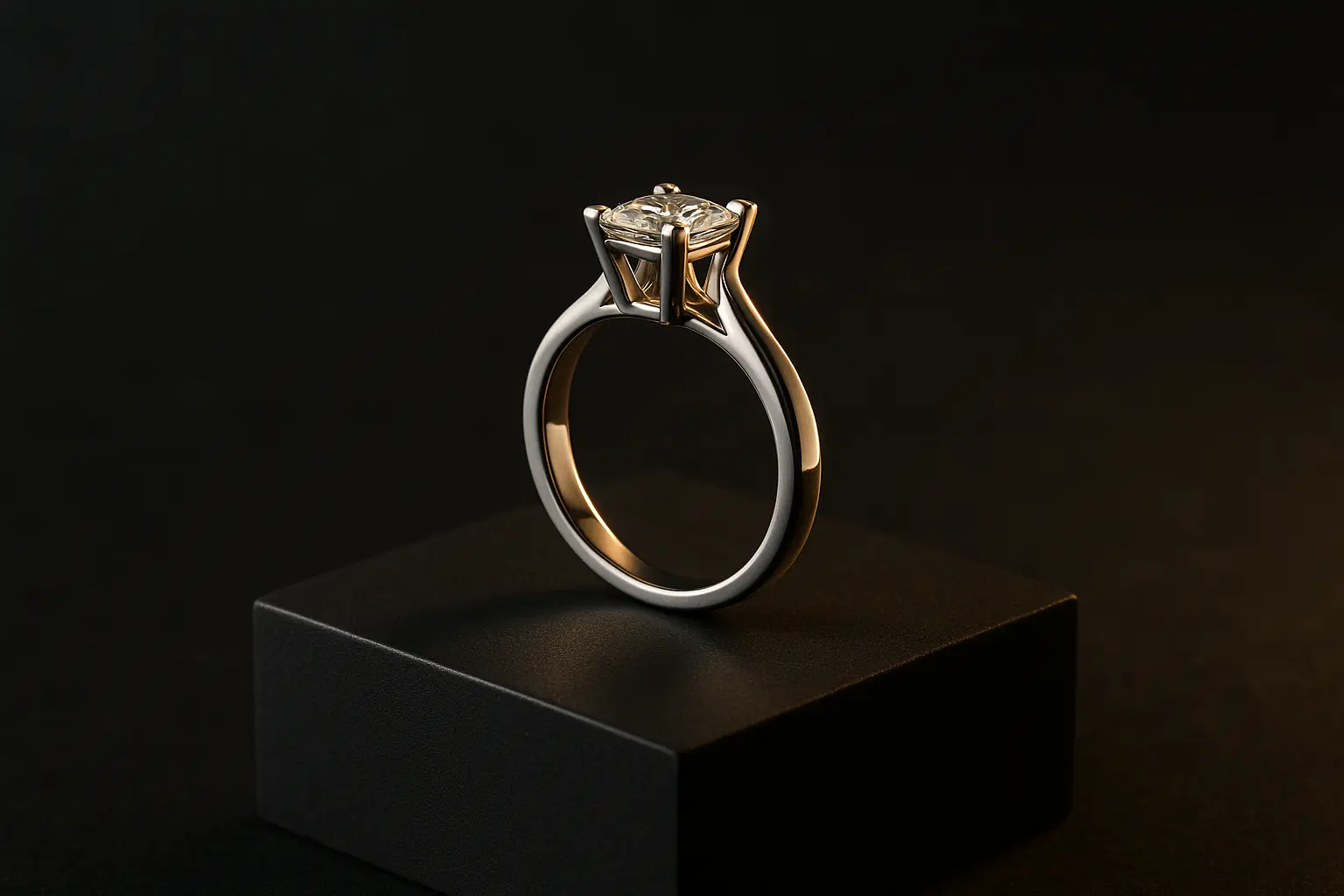
Engagement rings
How to choose an engagement ring in Hong Kong: a calm, practical guide
A practical way to choose a ring around the wearer, the stone, the setting and the written terms—without salary formulas or sales pressure.
Begin with the person, not a price formula
Before comparing stones, observe what the intended wearer already chooses. Do they wear yellow gold every day, or mostly silver-coloured metal? Are their pieces quiet and minimal, or expressive and layered? Do they favour smooth bands that sit close to the hand, or prominent settings? These clues are more useful than a generic trend list. Consider practical context too: someone who works with their hands, uses gloves, plays an instrument, or spends much of the day at a keyboard may prefer a lower profile that catches less. None of these observations determines the ring; they give you a thoughtful starting brief. If you can ask a close friend without spoiling the surprise, ask about style and fit rather than trying to extract a secret ring size.
Set a comfortable spending ceiling before visiting shops, and treat it as a limit rather than a target. There is no required salary multiple or universal "correct" engagement-ring budget. Marketing formulas are not financial advice. A clear ceiling helps you compare options without allowing a larger display price to reset your expectations. Think through what you need the total to include: centre stone, setting, resizing, taxes or other stated charges, and optional services. Ask the retailer to itemise the quotation so two offers can be compared on the same basis. It is sensible to preserve room for an independent check or insurance discussion if the ring's value makes those relevant. The aim is not to spend as little as possible; it is to choose a piece whose cost and trade-offs make sense to you.
“Set a comfortable total budget before browsing; ignore salary-multiple formulas.”
From the practical checklist

Choose the centre stone with evidence in view
If you are considering a diamond, the familiar 4Cs—cut, colour, clarity and carat weight—are a framework for describing qualities, not a single score that tells you which stone is best. The [Gemological Institute of America's overview of the 4Cs](https://4cs.gia.edu/en-us/4cs-of-diamond-quality/) explains each factor and why cut affects how a diamond handles light. A stone with a slightly lower grade in one dimension may look more appealing to you than a higher-numbered stone in another; view it in more than one lighting condition when possible. Ask to see the grading report for the exact stone, not only a sample report, and confirm that its identifying details correspond to the item offered. A report describes gemological characteristics under that laboratory's system; it is not an appraisal, a guarantee of future value, or a substitute for the seller's written terms.
Ask clearly whether the diamond is natural or laboratory-grown. Both are diamonds, but their origin should be disclosed accurately and in writing; they can differ in price and in the story that matters to a particular buyer. The US Federal Trade Commission's [Jewelry Guides](https://www.ftc.gov/business-guidance/resources/jewelry-guides) explain US disclosure expectations for diamond origin and terminology. Those guides concern US marketing law, not every Hong Kong sale, so do not mistake them for a statement of Hong Kong law. In Hong Kong, ask the retailer to identify the stone's origin and any treatments on the quotation or invoice, and check that the report describes the same type of stone. For coloured gems, ask the equivalent questions: natural or synthetic, treated or untreated, and what evidence supports the description. If wording is unclear, pause and get clarification before paying a deposit.
Compare stones in person and understand a report's limits
A grading report helps you compare documented characteristics, but it does not remove the need to inspect the stone. Look at the diamond face-up, from the side, and under ordinary room light as well as bright display lighting. Notice whether you enjoy its brightness and pattern, whether inclusions are visible to your eye at normal viewing distance, and whether the outline suits the setting. If the stone is accompanied by a report from a laboratory with an online verification service, use that service to check the report number and details. GIA's [Report Check](https://www.gia.edu/report-check-landing) can confirm the record for an eligible GIA report. Verification confirms the report record; it does not independently prove that the loose stone in front of you is the one described unless identifying features and any inscription are matched by a qualified person.
Ask what is included with the ring after purchase. A grading report, sales invoice, valuation and warranty are different documents with different purposes. The report describes gemological properties. The invoice records the transaction. A valuation estimates monetary value for a stated purpose and date, which may not equal a future resale offer. A warranty or service plan sets the retailer's own terms. Do not assume one document performs all four jobs. Before committing, ask whether the report is original or a copy, whether its number is inscribed on the stone, and who can verify the match. If a seller cannot explain what the paperwork does, ask them to put the relevant claim and service promise in writing instead of relying on verbal assurance.
Match the setting and metal to everyday life
The setting affects appearance, comfort and maintenance. A high prong setting can make a centre stone prominent and admit light around it, but it can also catch on clothing or hair depending on its shape. A bezel surrounds the stone with metal and can create a smoother profile, though visible metal changes the look. Halo, pavé and side-stone designs add detail but introduce more small settings that may need inspection over time. These are trade-offs, not a ranking. Try a similar finished ring on the hand, and look at the setting from the side rather than only from above. If the design includes small accent stones, ask what the retailer's process is if one loosens, whether inspection is offered, and which costs are included or charged separately.
Metal choice should follow the wearer's habits, preferences and sensitivity—not a blanket claim that one metal is always best. Gold karat indicates the proportion of gold in the alloy, while colour depends on the other metals and any surface finish. Platinum and gold have different appearance, weight, repair characteristics and price structures; exact properties depend on alloy and construction. Ask what metal and fineness are stated on the invoice, whether a white-gold ring is rhodium plated, and what care or replating may involve. Hong Kong has specific gold-marking rules for gold and gold-alloy articles; [Hong Kong Customs' consumer-protection guidance](https://www.customs.gov.hk/en/service-enforcement-information/consumer-protection/trade-desc/index.html) and [Cap. 362A](https://www.elegislation.gov.hk/hk/cap362A) describe that local framework. These rules are metal-specific; do not assume they apply identically to platinum or every imported item.
Get sizing and timing into the plan
Ring size is easier to address before a proposal than after, but guessing from a borrowed ring can mislead if it belongs to a different finger or is worn on a different hand. Finger size can vary with temperature, time of day and band width. If a discreet measurement is possible, treat it as an estimate and ask the jeweller how it was obtained. Confirm whether resizing is possible for the selected design, how many sizes the retailer considers feasible, what it costs, how long it takes, and whether resizing affects warranty or return terms. Some eternity bands, heavily set rings and unusual materials can be difficult or unsuitable to resize; the answer depends on the exact design. A seller should assess the actual ring rather than promise that any ring can be adjusted later.
Work backwards from the date you need the ring. A ready-to-wear piece may be available immediately, but sizing, engraving or a special order adds time. A bespoke commission involves design approvals, stone sourcing and production stages; timelines are estimates, not guarantees, unless the written agreement says otherwise. Ask when the quoted clock starts, which decisions you must make by each milestone, and what happens if a delivery date changes. If the proposal date is private, avoid leaving a custom order until the last moment. A simple plan—initial consultation, final approval, production, collection and any fitting—reduces the chance that urgency pressures you into accepting terms you have not read.
Compare written terms before a deposit
Before paying, request an itemised written quotation identifying the ring, centre stone, metal, dimensions or weight where provided, and report number if there is one. Check the total price, currency, separate fees, deposit amount and balance due. Read the retailer's return, exchange, cancellation and resizing terms for this exact purchase. Policies vary; do not assume that a custom-made or engraved item can be returned, or that a standard piece can be exchanged without conditions. Ask how a deposit is handled if you change the design, the selected stone becomes unavailable, or the delivery date moves. A clear written answer is more useful than a broad assurance such as "we will take care of you." Keep the quotation and final invoice together so you can compare what was promised with what was supplied.
If shopping across Hong Kong retailers, compare like with like: natural with natural or laboratory-grown with laboratory-grown; similar report characteristics; the same metal and fineness; and equivalent setting details. A lower headline price may reflect a different stone, lighter construction, a different service package or different terms. That is not automatically a problem, but it should be understood. The Hong Kong Consumer Council has published jewellery complaint guidance; its [consumer information](https://www.consumer.org.hk/en/consumer-rights) is a starting point if you need to understand complaint channels. It is not a substitute for reviewing terms or obtaining professional advice for a dispute. Keep a dated record of the listing, quotation and messages, and use the retailer's official contact channel to clarify any mismatch before purchase.
Decide what matters most, then stop comparing
Endless comparison can make every option feel wrong. Before visiting, choose the two or three qualities that matter most: perhaps a particular shape, a low profile, a documented natural origin, or a maximum total cost. Write down which compromises you are willing to make and which are not acceptable. When a candidate meets those conditions and the written details are clear, more browsing may add little. If you feel rushed, confused about disclosure or unable to take the paperwork away to read, pause. A reputable purchase should leave room for clear questions. You can return after reviewing the documents, ask another retailer for a comparable quotation, or choose a simpler ring that better fits your priorities. The ring is meaningful, but the purchase does not need a deadline imposed by a sales pitch.
Finally, ask how the ring should be cared for and what follow-up is available. Get any cleaning, inspection, repair or warranty terms in writing, including exclusions and the effect of third-party work. Keep the ring's invoice, report, photographs and service documents together. For a high-value item, ask an insurer what evidence and valuation format its policy requires before assuming a seller's valuation is sufficient. After collection, check that ring and paperwork match the quotation while you are still within any stated review or return period. A calm process is not about eliminating every uncertainty; it is about knowing what you are buying, what evidence supports the description, what the seller has committed to, and which questions remain yours to decide.
Practical checklist
- ✓ Set a comfortable total budget before browsing; ignore salary-multiple formulas.
- ✓ Confirm natural or laboratory-grown origin and any treatments in writing.
- ✓ Review the report for the exact stone and verify its number with the issuing laboratory.
- ✓ Try the setting from several angles and ask about inspection and repair terms.
- ✓ Confirm metal, fineness, sizing feasibility, cost and timing.
- ✓ Read return, cancellation, deposit and warranty terms before paying.
- ✓ Keep the quotation, invoice, grading report and service documents together.
Published 28 September 2026 · Reviewed 28 September 2026 · Editorial policy · Suggest a correction
Sources and further reading
-
GIA The 4Cs of Diamond Quality
GIA 4Cs · Accessed 28 September 2026
-
GIA Report Check
GIA · Accessed 28 September 2026
-
U.S. FTC Jewelry Guides
Federal Trade Commission · Accessed 28 September 2026
-
Hong Kong Customs consumer protection / trade descriptions
Hong Kong Customs and Excise Department · Accessed 28 September 2026
-
Cap. 362A
Hong Kong e-Legislation · Accessed 28 September 2026
-
Consumer Rights
Hong Kong Consumer Council · Accessed 28 September 2026